

Medically reviewed by Laura Ispas, MD. For general education only, not a substitute for an in-person evaluation.
A patient comes in having sneezed through three springs in a row, eyes watering every time she’s near a friend’s cat, congested most of September. She’s tried two different antihistamines and they help a little but not enough. The question she wants answered is simple: what exactly is she reacting to? Skin testing is usually how that question gets a real answer.
Environmental skin testing is one of the oldest diagnostic tools in allergy medicine, and one of the more reliable ones. Understanding what the process involves tends to reduce a lot of the anxiety patients bring into the appointment, because the reality of it is considerably less dramatic than what they’re imagining.
What Gets Tested
Environmental allergens are the things in the air and the surroundings rather than in food. The specific panel varies by geography and by what the patient’s history suggests, but a standard environmental workup typically includes:
- Tree pollens, grasses, and weeds common to the region
- Dust mites, which trigger symptoms year-round rather than seasonally
- Mold spores, both outdoor and indoor varieties
- Pet dander, cat and dog most commonly, though others can be added
- Cockroach, which is a significant trigger particularly in urban environments
The panel gets selected based on what’s clinically relevant to where the patient lives and what their symptom pattern looks like. Testing for tree pollens that don’t grow in northern Virginia doesn’t add useful information, so panels are tailored rather than identical across every patient.
How the Test is Done
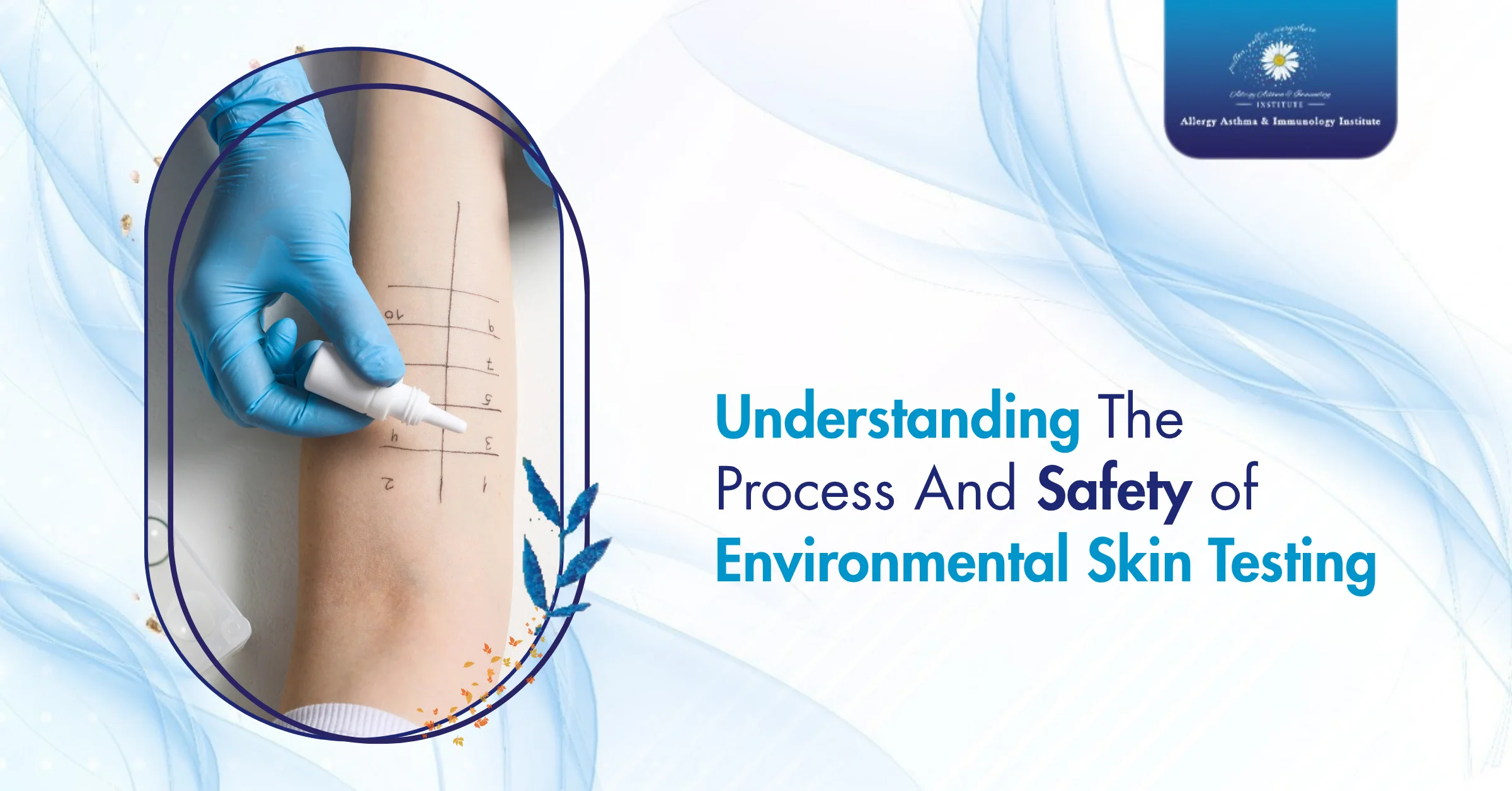
The most common method is the skin prick test. A small amount of each allergen extract is placed on the forearm or upper back, then a lancet is used to lightly prick the skin through the drop, just enough to introduce a tiny amount beneath the surface. Nothing is injected. The prick itself is shallow and brief, most patients describe it as barely noticeable compared to a blood draw.
After about fifteen minutes, the skin is examined. Where the immune system recognizes an allergen, a small raised wheal appears at that spot, similar to a mosquito bite. The size of the wheal corresponds roughly to the degree of sensitivity. Two controls are applied alongside the allergens: a histamine control that should produce a reaction in anyone, confirming the skin is responding normally, and a saline control that should produce nothing, confirming the reaction isn’t just irritation from the prick itself.
Intradermal testing, where a small amount is injected just under the skin rather than pricked through, is sometimes done as a second step when skin prick results are negative but symptoms strongly suggest a particular allergen. It’s more sensitive and used selectively, not as the default starting point.
Medications to Stop Before Testing
Antihistamines suppress the skin’s ability to react and need to be stopped before testing or the results won’t be readable. The window depends on the specific medication:
- Most over-the-counter antihistamines like cetirizine, loratadine, or fexofenadine require stopping five to seven days beforehand
- Older antihistamines like diphenhydramine clear faster, usually three to four days is sufficient
- Some antidepressants with antihistamine properties, like certain tricyclics, need a longer hold period
- Nasal steroid sprays and inhaled steroids for asthma do not need to be stopped
The specific instructions come from the allergist’s office before the appointment. If a patient is unsure whether a medication they take will affect results, that’s exactly the question to ask when scheduling.
How Safe Skin Testing Is
Skin prick testing has an excellent safety record. Serious systemic reactions are rare, estimated at around one in a million tests, and the reason the test is done in an allergist’s office rather than at home is precisely because the team is equipped to manage any reaction quickly if one occurs. Epinephrine, antihistamines, and monitoring equipment are all on hand.
Local reactions at the test site are common and expected. Itching, redness, and small wheals at positive sites are the point of the test. These resolve within an hour or two. Patients with very sensitive immune systems may have a slightly more pronounced local response, which is managed with a topical antihistamine or cold compress and is not a cause for concern.
Those who have previously suffered from severe anaphylaxis, serious cardiovascular disease, or who are pregnant are the most important individuals to discuss safety issues with in advance. These are not contraindications, but rather, affect the course of thinking of the allergist when choosing the type of testing to perform and how to be monitored during the appointment.
What the Results Mean
If the skin test is positive, it indicates that there are IgE antibodies in the immune system against that allergen. It does not necessarily indicate that this allergen is responsible for the current symptoms. Context is important: a positive result to a tree pollen in a patient with symptoms only in fall, when the trees are not in bloom, cannot be used to guide treatment.
However, a negative result is also a good result. It can help rule out allergic sensitization as the cause of symptoms, which helps to focus the diagnostic process on other causes. A skin test helps differentiate nonallergic rhinitis, which does not involve IgE, from allergy.
Results are interpreted in the context of the entire clinical picture, symptom history, onset and intensity, what helps or hinders. The numbers independently do not give the full answer, they are only a part of the answer.
What Comes After Testing
What Comes After Testing?
Once the allergens responsible for the symptoms can be determined, there are three main ways the conversation typically goes: avoidance of the specific allergens, drug management of the symptoms based on their cause, and allergy shots, or immunotherapy, for people who do not want to have to take medication for a lifetime.
The goal of allergen immunotherapy, whether it’s an injection or an under-tongue drop or tablet, is to slowly teach the immune system to tolerate the allergen(s) it’s reacting to. It takes time to get it, usually 3-5 years for full effects, but in many cases, it does help to reduce or stop the symptoms that affect the patients, not just to mask them with painkillers while they take them.
Allergy symptoms that persist for several years with no resolution of the cause is most likely where skin testing will be the answer.
This article was medically reviewed by Laura Ispas, MD, a board-certified allergist and immunologist with over 25 years of experience at the Allergy, Asthma & Immunology Institute in Leesburg, VA. Dr. Ispas evaluates and treats environmental allergies, asthma, and related conditions in both children and adults.
Visit allergy-asthma-immunology.com to schedule your evaluation.