
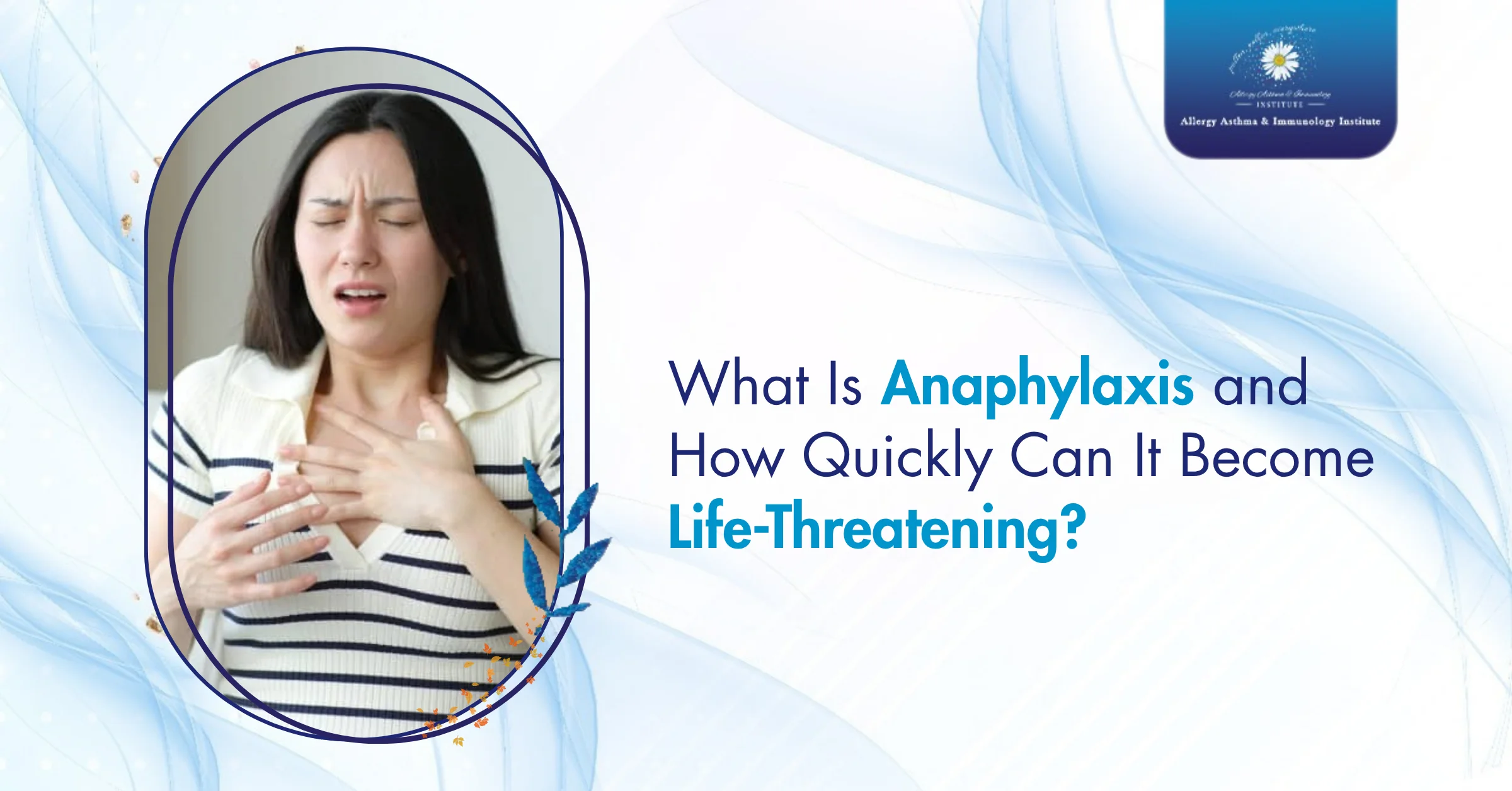
Have you ever wondered what happens when an allergic reaction becomes very serious?
Many people have mild allergies. They may sneeze around cats. They may get an itchy rash from a plant. But sometimes, an allergic reaction can be much worse.
Anaphylaxis is a severe, life-threatening allergic reaction. A person needs help right away when this happens.
At Allergy Asthma & Immunology Institute, we help people understand allergies and learn how to stay safe.
Let’s look at what anaphylaxis is and how quickly it can become life-threatening.
What Is Anaphylaxis?
Anaphylaxis is a severe, rapid, potentially fatal allergic reaction.
The immune system overreacts to an allergen, causing mast cells and basophils to release chemicals like histamine throughout the body.
These chemicals create problems in multiple body systems.
Without immediate treatment, it can lead to anaphylactic shock, loss of consciousness, or death.
Common Triggers of Anaphylaxis
A trigger is the item that makes your body panic. Finding your exact trigger helps you stay safe. People have very different triggers. Common triggers include:
- Foods such as peanuts, tree nuts, shellfish and fish
- Insect stings, such as bees and wasps
- Medicines
- Latex
- Other allergens in highly sensitive people
Sometimes, the cause is not clear. A person may also have a reaction without knowing they had an allergy before.
Warning Signs You Need to Know
When anaphylaxis starts, your body gives you warning signs. These signs tell you something is very wrong. They may be all over your body.
Keep an eye out for these bold warning signs:
- Hives or itchy skin
- Swelling of lips, tongue, or throat
- Trouble breathing or swallowing
- Wheezing or coughing
- Dizziness or fainting
- Slow or irregular heartbeat
- Stomach pain, vomiting, or diarrhea
- Feeling suddenly weak or confused
How Quickly Can Anaphylaxis Become Life-Threatening?
A severe allergic reaction is very scary. It can become life-threatening very fast. It simply is not going to resolve itself unless there is active involvement. The symptoms begin after only a few minutes. If a person is stung by a bee, the bad reaction can start in just seconds.
It may take several minutes if a person eats one of the trigger foods. Sometimes it takes up to an hour to feel sick. Once the signs begin, they get much worse in the blink of an eye. The throat can close up all the way. Air cannot get into the lungs. Blood pressure drops low. The person becomes very weak. You must act right away; every single second matters. Never wait to see if the person feels better. Waiting is very dangerous.
What to Do During an Emergency
When a bad reaction starts, you must be ready. You can be a hero if you know what to do. Follow these easy steps:
- Use the Medicine
Many people carry a special shot called an autoinjector. The medicine inside is epinephrine. Use this shot right away. It opens the breathing tubes.
- Call for Help
Dial 911 right after using the medicine. Tell the person on the phone it is an allergic emergency.
- Lay the Person Flat
Have the person lie down on their back. If they feel sick, turn them on their side. Do not let them stand up.
- Stay Very Calm
Keep the person happy and calm until the ambulance arrives.
How to Stop Bad Reactions Before They Start
The best emergency response is prevention. Allergies can’t be cured, but there’s a way to live safely. First, you must stay far away from your triggers. Read every single food label. Ask a lot of questions at restaurants.
Second, always carry your special medicine. Take your autoinjector everywhere you go. Place it in your backpack.
Never step outside without it. Staying safe starts with being prepared.
Finding the Root Cause of Your Allergies
You need to know your allergy trigger to avoid it. A specialist doctor can test your skin or blood to find the cause. These tests show exactly what makes your body panic. Once you know the real cause, you can build a safety plan. You can share this plan with your family and teachers.
How Allergy Asthma & Immunology Institute Can Help
Living with extreme allergies may be unsettling, but not without assistance.
At Allergy Asthma & Immunology Institute, Dr. Laura Ispas and the team help kids ages 5 and up and adults.
We do not just hide your symptoms; we find the root cause of your allergies. We offer:
- Skin testing to figure out your exact triggers
- Advanced treatments like allergy shots
- The newest biologic therapies for asthma and severe allergies
- A customized plan to keep you completely safe
In our Institute, you always see the same doctor. Take control of your health and reach out for a personal care plan.
FAQs
Can anaphylaxis happen to anyone?
Yes, this reaction can affect practically everybody. People with asthma or allergies are at risk.
Do I always need to go to the hospital after using epinephrine?
Yes, always go to the emergency department. The effect of the drug subsides after a time. The allergic reaction can come back hard. For your own safety, doctors have to observe you.