
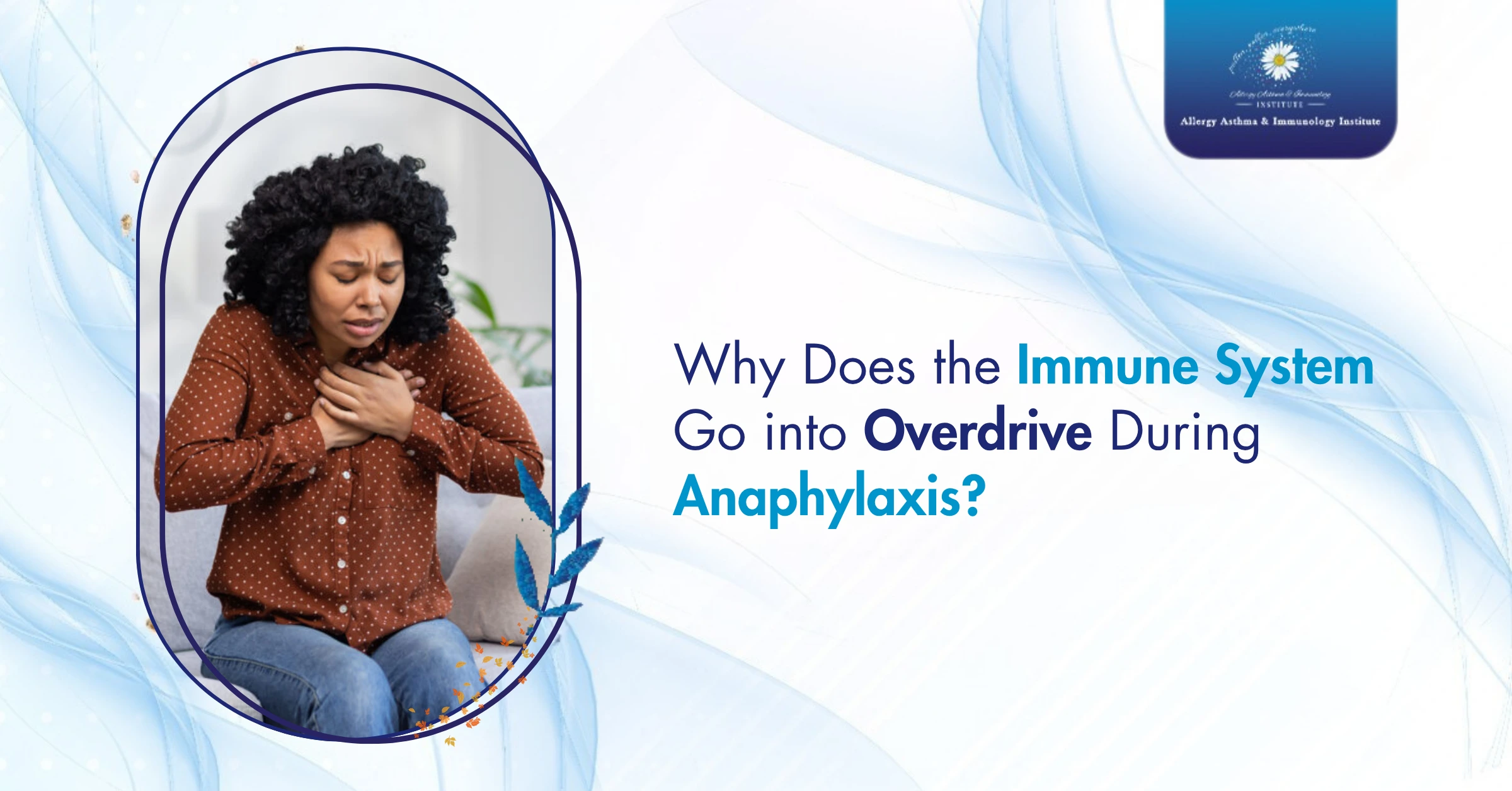
During a severe allergic reaction (anaphylaxis), your immune system misidentifies a harmless substance, like a peanut or insect sting, as a major threat.
To protect you, it releases a massive flood of chemical “alarms” called histamines, causing rapid, dangerous swelling and breathing issues that require immediate emergency care.
At the Allergy Asthma & Immunology Institute, we help kids (five and older) and adults figure out what causes their allergies and make a plan to keep them safe.
What Is Anaphylaxis?
Anaphylaxis is a very bad allergic reaction. It is a medical emergency.
It happens when your body reacts too strongly to something. This could be a food, a bee sting, or a medicine.
The reaction can affect many parts of your body at once. You may have trouble breathing, feel sick, or feel dizzy. Your blood pressure may also drop.
Anaphylaxis can be deadly if it is not treated fast. You must get help right away.
The Immune System’s Normal Job
Your immune system is like a team of guards. It protects your body from germs, like viruses and bacteria.
But sometimes, this team makes a mistake. It thinks a safe thing, like a peanut, is harmful.
This mistake can cause an allergy. When you come into contact with that thing again, your body may react very strongly.
What Happens Inside the Body During Anaphylaxis
Anaphylaxis is an immediate allergic reaction to certain cells, called mast cells. These cells contain small vesicles containing chemicals, such as histamine.
The Step-by-Step Chain Reaction:
- Sensitization
Your immune system produces IgE the first time you encounter an allergen. These antibodies, Immunoglobulin E (IgE) bind to mast cells like tiny antennae.
- The Second Exposure
The next time the allergen enters your body, it sticks to the IgE antennas on the mast cells.
- The Massive Burst
This sticking action tells the mast cells to break open. They release vast amounts of histamine and other chemicals into the bloodstream in one go. This is known as “degranulation”.
- Whole-Body Chaos
The chemicals spread around the whole body. They dilate blood vessels and allow blood to leak out, narrow airways and cause a rapid drop in blood pressure.
This is why anaphylaxis is so serious. It is not a small, local reaction. It is a full-body chemical flood.
Why the Reaction Feels So Sudden
Anaphylaxis can be frightening because it can happen very quickly. Most reactions begin within minutes of coming into contact with the allergen. Chemicals from the mast cells work rapidly on the blood vessels and smooth muscles.
The body can’t acclimate itself over time. The drop in blood pressure and sudden narrowing of airways are a life-threatening emergency.
Common Allergy Triggers That Can Confuse the Immune System
Many normal things can confuse a sensitive immune system. Here is a list of common triggers:
- Peanuts and tree nuts like walnuts
- Shellfish, crab and fish
- Chicken eggs and cow’s milk
- Insect stings from bees or wasps
- Certain medicines used to fight infections
Early Warning Signs That the Body Is in Overdrive
Many body systems are involved in anaphylaxis. Watch for:
- Hives, itching, redness, swelling of lips or face
- Wheezing, coughing, difficulty breathing, narrowing of the throat
- Weak pulse, dizziness, fainting, low blood pressure
- Nausea, vomiting and stomach cramps
Symptoms can start mild and get worse very quickly. If the condition is severe, a person may collapse or cease to breathe.
How to Stop the Immune Overdrive During Anaphylaxis
There is a fast way to stop it: epinephrine (also called adrenaline). It may also be called an EpiPen.
Why epinephrine works:
- It tightens blood vessels to raise blood pressure
- It opens airways so breathing gets easier
- It stops mast cells from releasing more histamine
Epinephrine is the number one treatment for anaphylaxis. It is safe and should be given as soon as anaphylaxis is suspected. There’s no need to delay. If you have been prescribed an autoinjector, use it right away and call for emergency help.
A Note on Biphasic Reactions
Sometimes, symptoms come back hours after the first reaction seems to be over. This is called a biphasic reaction. It can happen without any new contact with the allergen.
Doctors will usually try to observe for several hours after treatment to ensure that the reaction doesn’t recur. It is for this reason that emergency care is crucial even when the initial signs get better.
When to Get Help Right Away
Call 911 or go to the emergency room if you or someone else has:
- Trouble breathing or swallowing
- Swelling of the tongue or throat
- A sudden decrease in energy or fainting
- Hives that spread quickly along with other symptoms
Managing Severe Allergies and Immune Overdrive with Experts
It’s important to see a specialist after having anaphylaxis or a severe allergic reaction. An allergist can help you find out exactly what triggered the reaction and create a safety plan.
At Allergy Asthma & Immunology Institute in Leesburg, VA, Dr. Laura Ispas and her team provide expert care for allergies, asthma and immune conditions. We offer:
- Skin testing to identify triggers
- Venom allergy treatment for insect stings
- Food allergy evaluations for children and adults
You get personalized care from one doctor, not a large corporate allergy chain.
FAQs
Can you outgrow a severe allergy?
Sometimes kids outgrow milk or egg allergies as they get older. However, allergies to peanuts or tree nuts usually stay for life. It is important to get tested often to know for sure.
Do I need a doctor after using epinephrine?
Yes, always. The medicine stops the first attack very fast. But the chemical allergy storm can sometimes come back a few hours later. A doctor needs to watch you to keep you safe.
Can just a smell cause anaphylaxis?
Usually, you have to actually eat or touch the trigger for a severe reaction. Smelling a peanut across the room rarely causes a huge emergency, but it can make you feel sick or anxious.
Take Control of Your Allergy Safety
Anaphylaxis is alarming, but you’re not alone. A clear plan and the right expert can make all the difference.
If you or your child has had a severe reaction, reach out to Allergy Asthma & Immunology Institute today. Our expert team will help you build a highly safe plan. We want to make sure you can live a happy and healthy life.