
As a parent, it can be scary to see red, itchy skin on your child. You’ve tried every kind of lotion, cream, special bath and nothing helps.
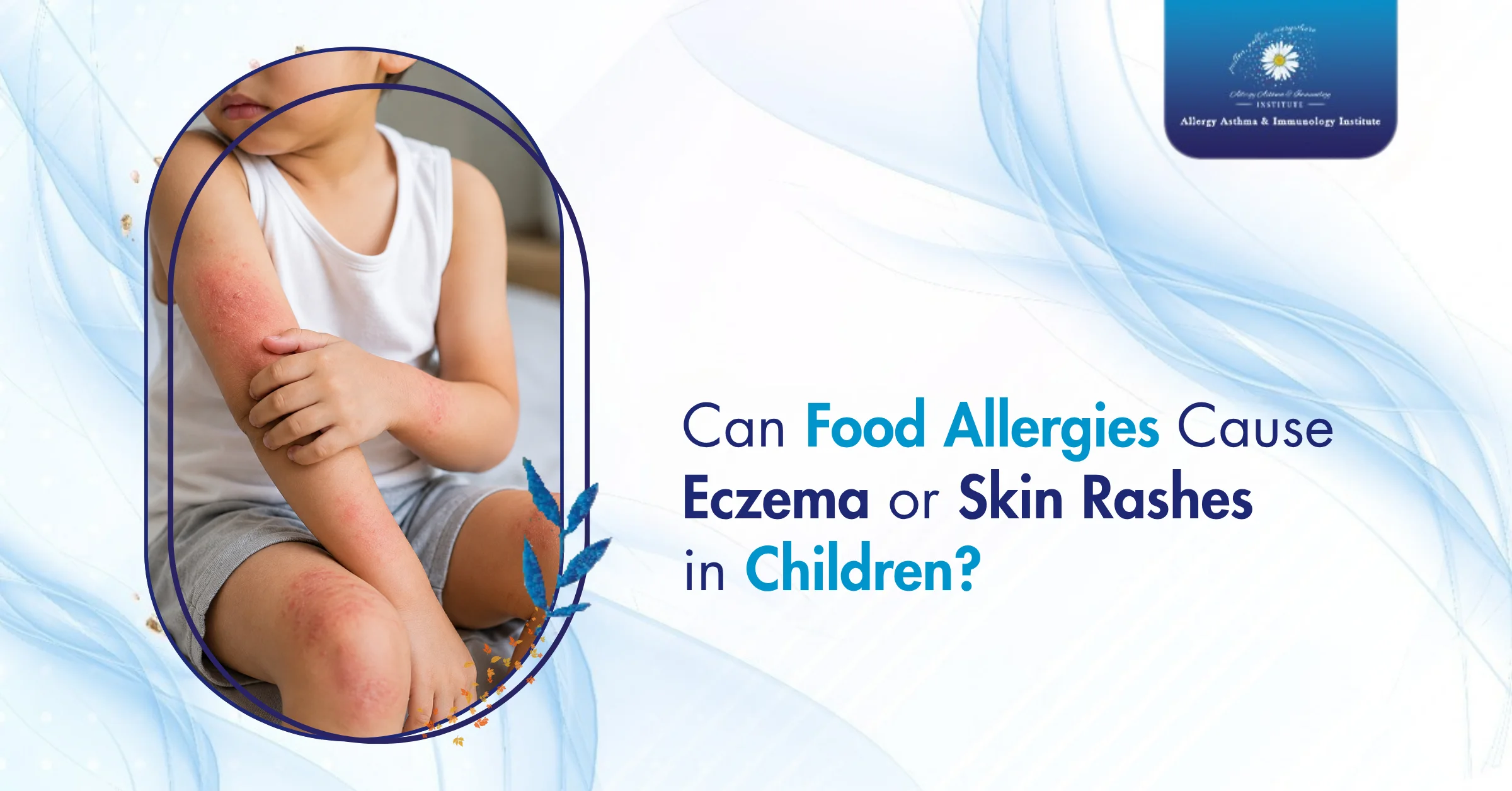
You begin to ask whether there is something your child eats that might be the cause. Can food allergies cause eczema or skin rashes in children?
If you’ve ever wondered about this, you are not alone. Many parents of children with eczema have the same concern.
At Allergy Asthma & Immunology Institute, we’re here to educate families about the distinction between symptoms of food allergy, eczema and other skin reactions.
Let’s talk about it.
What Is Eczema?
Eczema, also called atopic dermatitis, is a skin condition. It makes your skin:
- Dry like sandpaper
- Itchy like a mosquito bite that won’t stop
- Red like a sunburn
It usually shows up on the insides of elbows, behind knees or on cheeks. You can’t catch it from someone else; it’s not like a cold!
Sometimes it gets better. Sometimes it gets worse. When it gets worse, we call it a “flare-up.”
What Is a Food Allergy?
- An immune system reaction to a normally safe food (such as milk, eggs, peanuts, tree nuts, wheat, soy, fish or shellfish) mistakenly identified as harmful.
- Reactions happen quickly and can sometimes be severe.
The Connection: Can Food Allergies Cause Eczema or Skin Rashes in Children?
Yes, but not always.
While food allergies do not cause all eczema cases, they can trigger flare-ups in certain babies and toddlers, particularly those with moderate to severe eczema.
A compromised, weakened skin barrier allows food proteins to enter the body through the skin, potentially sensitizing the immune system. However, most mild eczema is driven by daily dryness, harsh soaps, or extreme weather, rather than food.
Signs You Should Watch For
You know your child best. Pay attention to patterns:
Classic food allergy signs (sudden reaction):
- Hives, red, itchy bumps on the skin
- Swelling of the lips, face or tongue
- Throwing up or diarrhea
- Wheezing or trouble breathing
Eczema-related signs (more chronic):
- Dry, scaly, cracked skin that itches all the time
- Rash in the creases of elbows, knees or behind the ears
- Skin that gets worse in cold weather
- Flare-ups that happen hours or even a day after eating certain foods
If your child eats a food and gets a rash after only a few minutes, it is probably an allergy. If it’s dry and itchy every day, it’s likely to be eczema and food may be a contributing factor, but there may be other causes as well.
How Are Food Allergies and Eczema Diagnosed?
If you suspect a food allergy, don’t guess; see a specialist. At Allergy Asthma & Immunology Institute, we take a thorough approach under the guidance of Dr. Ispas.
Our evaluation includes:
Detailed History
We’ll ask about your child’s symptoms, when they occur and what they eat.
Skin Prick Test
We place a tiny drop of a suspected food allergen on the skin and gently prick it. If a small, raised bump appears within 15–20 minutes, it suggests an allergy. The test is quick and well‑tolerated by most children.
Skin prick tests can give false positives; a positive test doesn’t always mean your child will react to eating the food. That’s why a specialist’s interpretation is crucial.
Blood Tests (If Needed)
To measure allergen‑specific IgE antibodies.
Oral Food Challenge
In some cases, we may need to manage your child’s eating of a small quantity of the suspected food in a properly controlled medical environment to confirm or exclude an allergy. This is the gold standard, but it’s only done when it’s safe.
We’ll also examine your child’s skin to confirm eczema and identify any coexisting conditions.
How Are Eczema and Food Allergies Treated?
The treatments are different for each problem.
For Eczema: Fix the Skin!
- Use thick, fragrance-free lotion every day
- Use special creams the doctor gives you
- Avoid harsh soaps and hot water
- Treat flare-ups early
Good skin care is the most important step! When skin is healthy, it’s harder for allergens to get in.
For Food Allergies: Avoid the Food!
- Read food labels carefully
- Tell family, friends and teachers about your child’s allergy
- Have an action plan for emergencies
At Allergy Asthma & Immunology Institute, Dr. Ispas can help create a personalized plan for your child. She can teach you how to avoid the food and what to do if your child eats it by mistake.
When to Seek Emergency Care
Call 911 or go to the ER right away if your child:
- Has trouble breathing
- Has swelling of the tongue or throat
- Feels dizzy or pale
- Throws up many times
These are indications of a severe reaction called anaphylaxis. Your child requires urgent assistance.
The Bottom Line
So, can food allergies cause eczema or skin rashes in children?
Food allergies can trigger eczema flare-ups and make existing eczema worse. Meanwhile, eczema can make a child more prone to developing food allergies. The two are very related.
Talk with your child’s doctor if your child’s eczema continues to come back or you notice a rash when your child eats. Most children can feel better with the proper tests and treatment!
At Allergy Asthma & Immunology Institute, we care for children aged 5 and up and adults. We conduct skin tests, provide food allergy advice and assist with difficult eczema. We make a plan just for your child.
Call us today to book a visit. We are here to help your child sleep better, feel better and have happier skin!
FAQs
Is every rash after eating a food allergy?
No. Rashes can also be triggered by heat, sweat, or soap.
Will stopping a food make eczema completely go away?
It may help, but many children still require daily skin lotions and prescribed medical care.
How long does food take to worsen eczema?
Reactions can manifest within minutes, hours, or up to a day later. Keeping a food diary is a great way to spot patterns.