

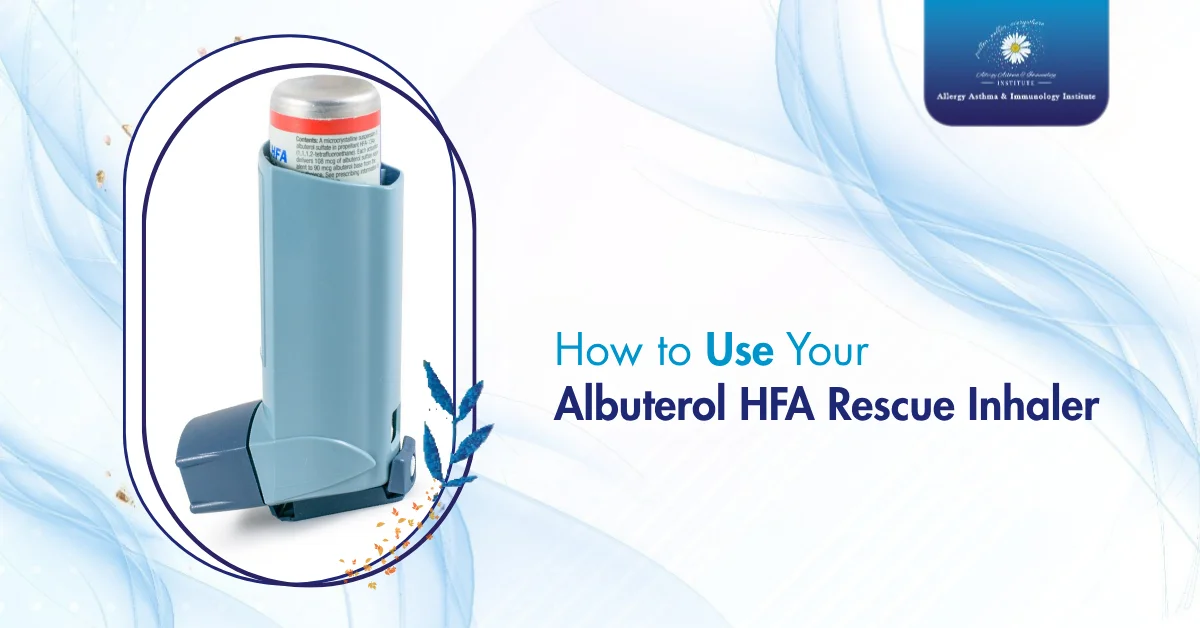
(Examples: Ventolin HFA®, ProAir HFA®, Proventil HFA®, generic Albuterol HFA)
What is Albuterol?
Albuterol is a quick-relief (rescue) medication that relaxes the muscles around your airways within minutes, making it easier to breathe. It is used to treat sudden symptoms such as:
- Wheezing
- Shortness of breath
- Chest tightness
- Persistent coughing due to asthma
- Prevention of exercise-induced asthma (when instructed by your physician)
This medication is not a replacement for your daily controller inhaler.
Before You Begin
- Remove the cap.
- Check the mouthpiece for dust or debris.
- Shake the inhaler well for 5 seconds.
- If using the inhaler for the first time, or if it has not been used for several days (follow the manufacturer’s instructions), prime the inhaler before use.
Step-by-Step Instructions
Step 1
Stand or sit upright.
Step 2
Breathe out completely.
Step 3
Place the mouthpiece between your teeth and seal your lips tightly around it.
Step 4
Begin breathing in slowly and deeply through your mouth.
Step 5
As you begin inhaling, press the canister one time.
Continue inhaling slowly for 3–5 seconds.
Step 6
Hold your breath for approximately 10 seconds, or as long as comfortable.
Step 7
Slowly breathe out.
Step 8
If a second puff has been prescribed, wait approximately 30–60 seconds, shake the inhaler again, and repeat the steps above.
When Should I Use It?
Use exactly as directed by your physician.
Common situations include:
- Sudden asthma symptoms
- Before exercise (if prescribed)
- During asthma flare-ups
If you find yourself needing your rescue inhaler more than 2 days per week (not counting pre-exercise use), your asthma may not be well controlled. Contact our office for evaluation.
Common Mistakes
- Inhaling too quickly
- Forgetting to shake the inhaler
- Not coordinating inhalation with pressing the canister
- Taking multiple puffs without waiting between them
- Emptying your lungs incompletely before inhaling
Cleaning Your Inhaler
Clean the mouthpiece according to the manufacturer’s instructions, generally about once each week.
Allow it to dry completely before using again.
Always replace the protective cap.
Possible Side Effects
You may notice:
- Mild hand tremor
- Feeling jittery
- Fast heartbeat
- Mild nervousness
These effects usually improve within a short time.
Seek emergency medical care if symptoms worsen after using the inhaler or if breathing becomes more difficult.
Call Our Office If
- You need your rescue inhaler more frequently.
- Your symptoms wake you at night.
- Your asthma limits normal activities.
- The medication does not provide adequate relief.
Go to the Emergency Room or Call 911 If
- Severe difficulty breathing
- Lips or fingernails turn blue
- Unable to speak in full sentences
- Rescue inhaler is not helping
- Severe chest tightness continues
Helpful Tips
• Keep your inhaler with you at all times.
• Monitor the dose counter and refill before it reaches zero.
• Store at room temperature.
• Do not leave the inhaler in excessive heat or freezing temperatures.
• Review your inhaler technique with your healthcare provider at every visit.
Questions? Please contact Allergy Asthma & Immunology Institute.